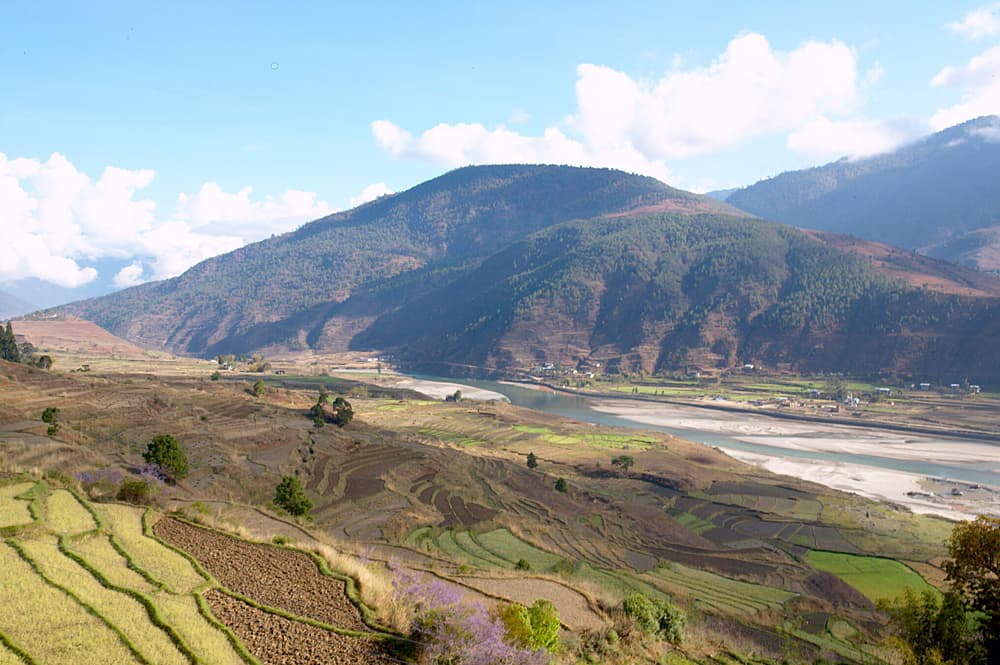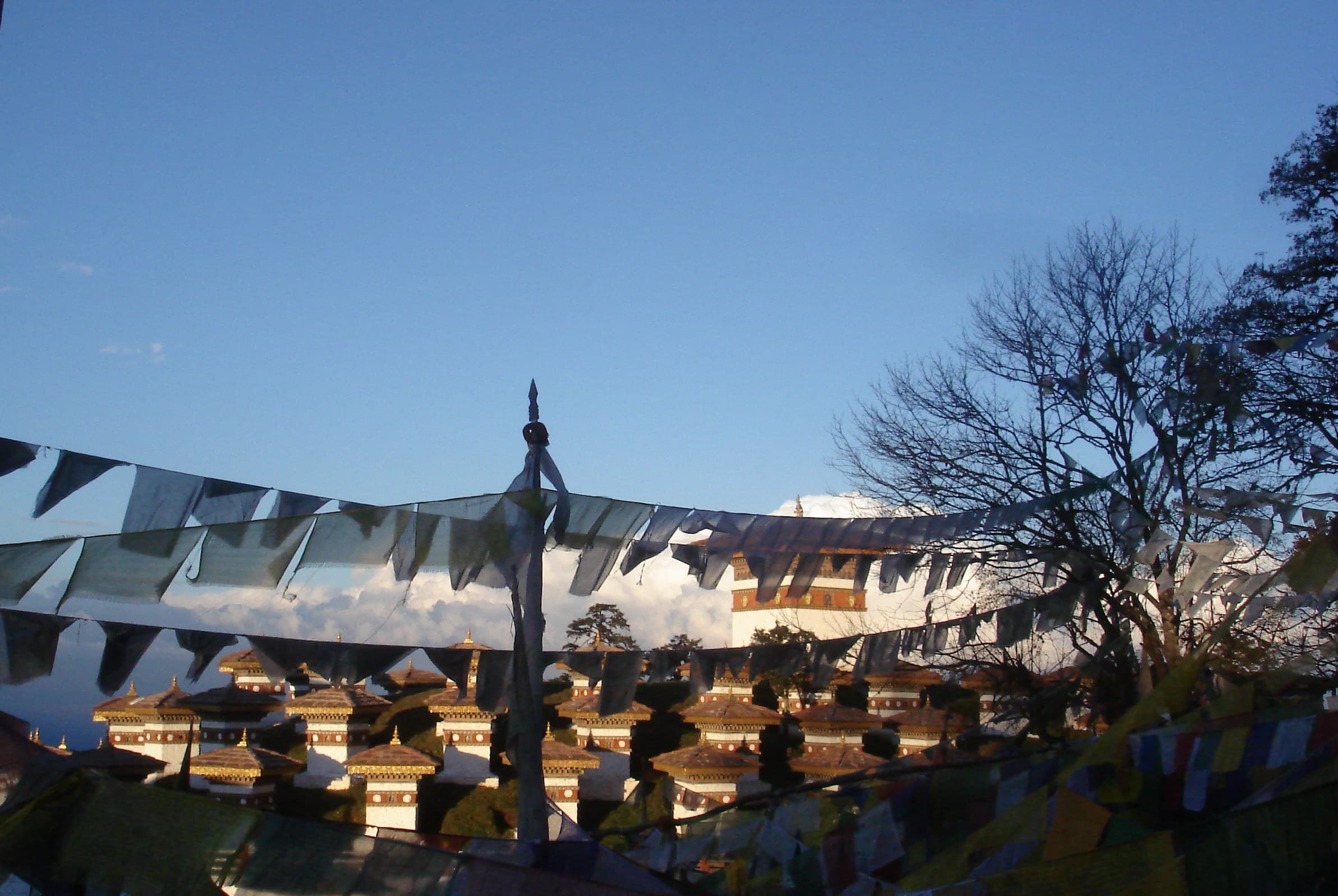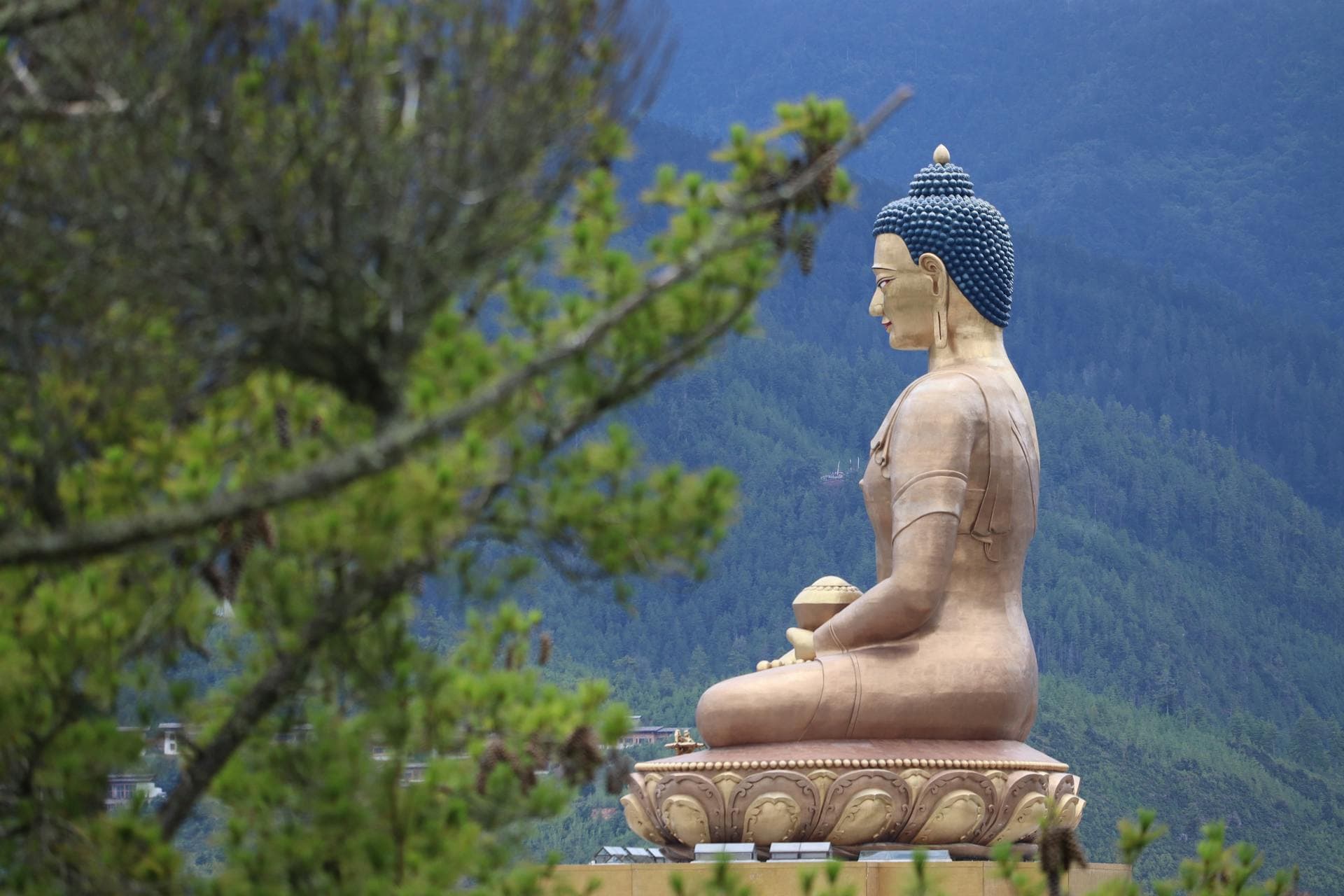
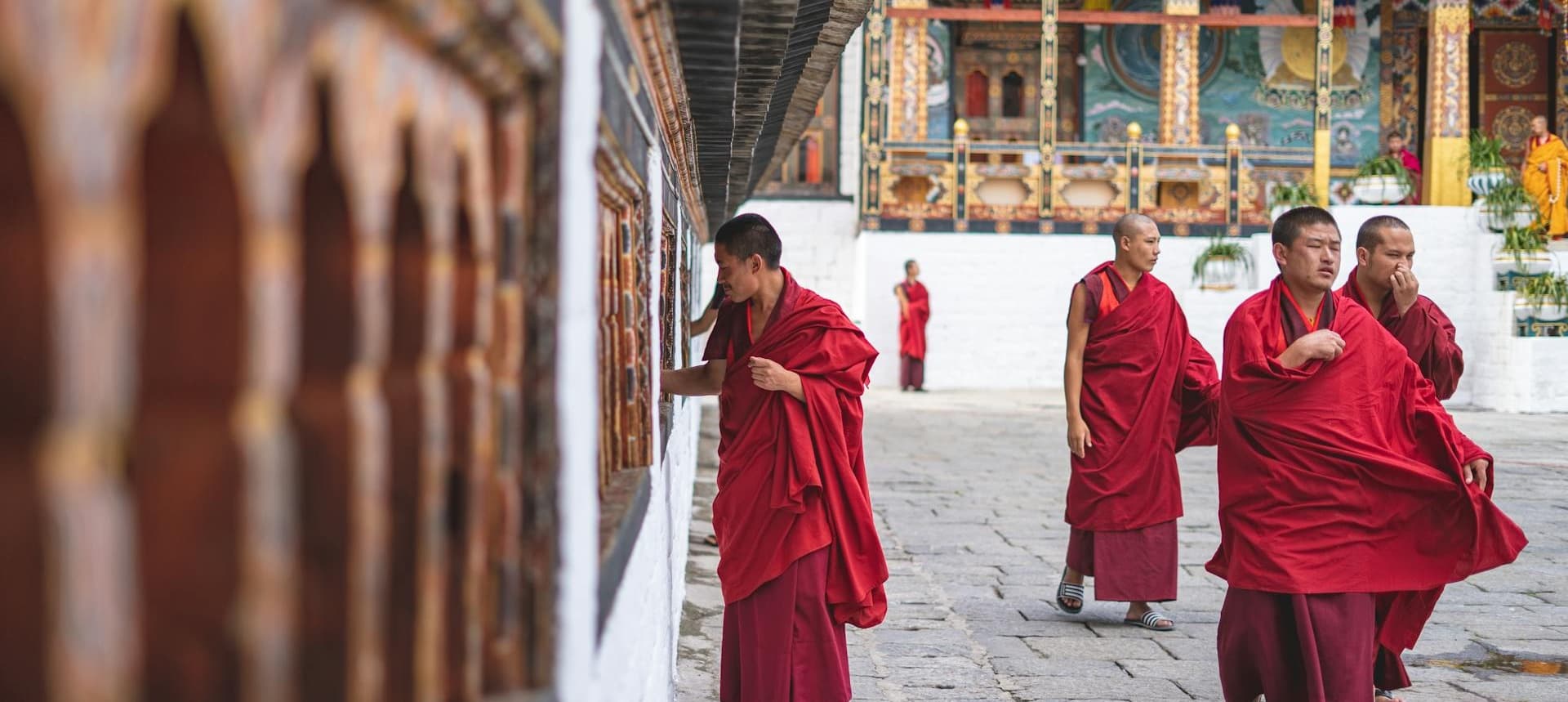
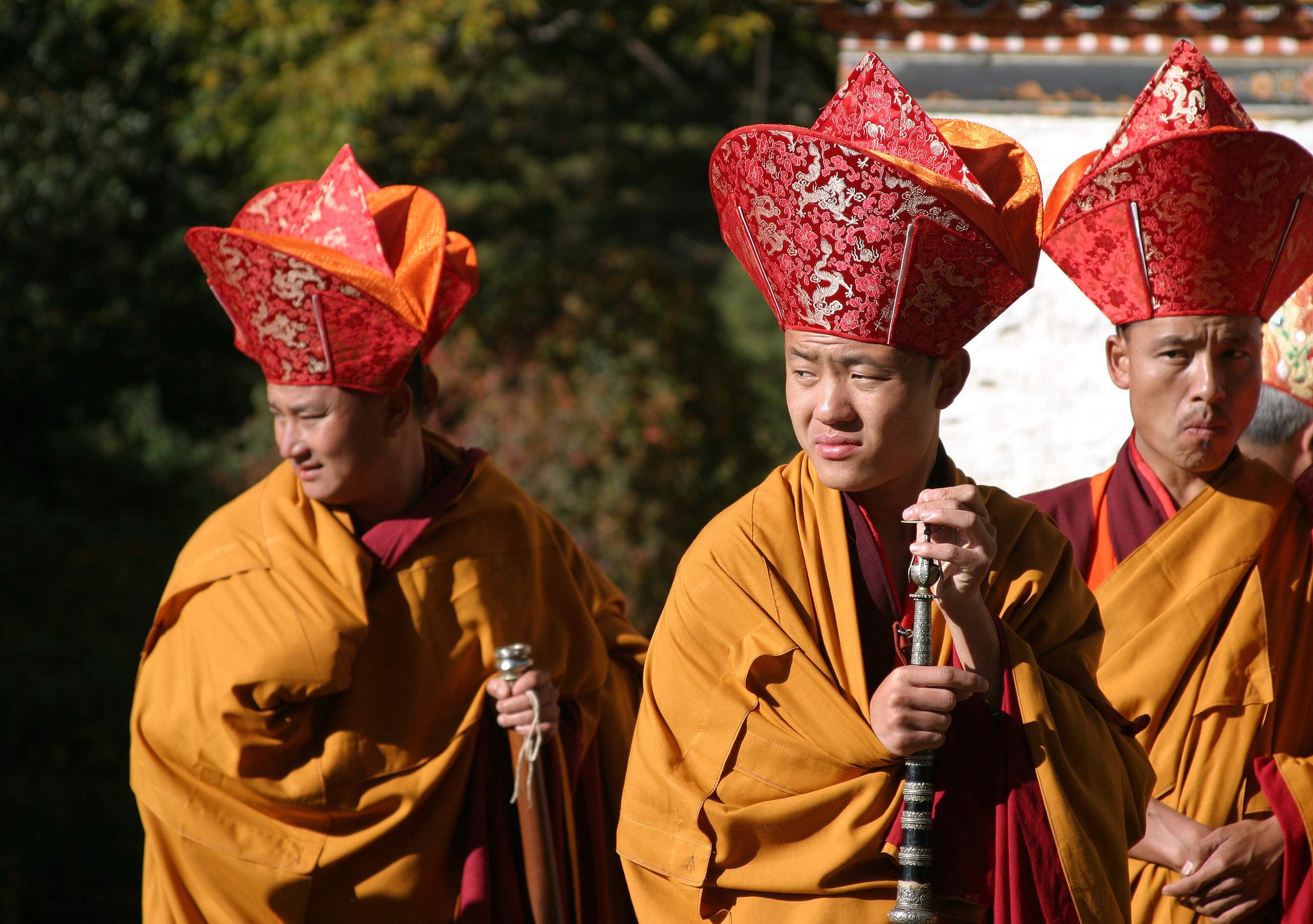
Vajrayana Buddhism is not a backdrop in Bhutan — it is the living rhythm of the kingdom. It shapes daily life in ways both grand and intimate: in butter lamps glowing inside ancient temples, in prayer flags carrying blessings across mountain passes, and in the quiet devotion of people circling chortens or pausing at roadside shrines. Across the country, spirituality is woven into the landscape itself, from cliffside monasteries and whitewashed lhakhangs to majestic dzongs overlooking river valleys.
For visitors, this is what makes Bhutan so extraordinary. You do not simply see spirituality here — you move through it. You feel it on the climb to Taktsang, in the stillness of monastery courtyards, in the sound of monks chanting, and in the vivid energy of tshechus, where sacred mask dances bring centuries of tradition to life. These are not staged moments or relics of the past, but part of a culture in which faith remains fully present.
What makes Bhutan especially moving is the way the sacred and the everyday are never far apart. A family may stop to make an offering on the way to market; an elderly pilgrim may turn a prayer wheel at dawn; a young monk may be seen hurrying across a temple courtyard. Even Bhutan's wellness traditions carry this deeper thread, with meditation, hot-stone baths, and time in nature offering not just rest, but reflection.
To travel through Bhutan is to enter a place where stillness, beauty, and belief exist side by side. The monasteries, festivals, and mountain scenery may first draw you in, but it is often the deeper feeling of calm, reverence, and connection that stays with you long after you leave. Bhutan does not simply show you its spiritual life — it invites you to experience it.