
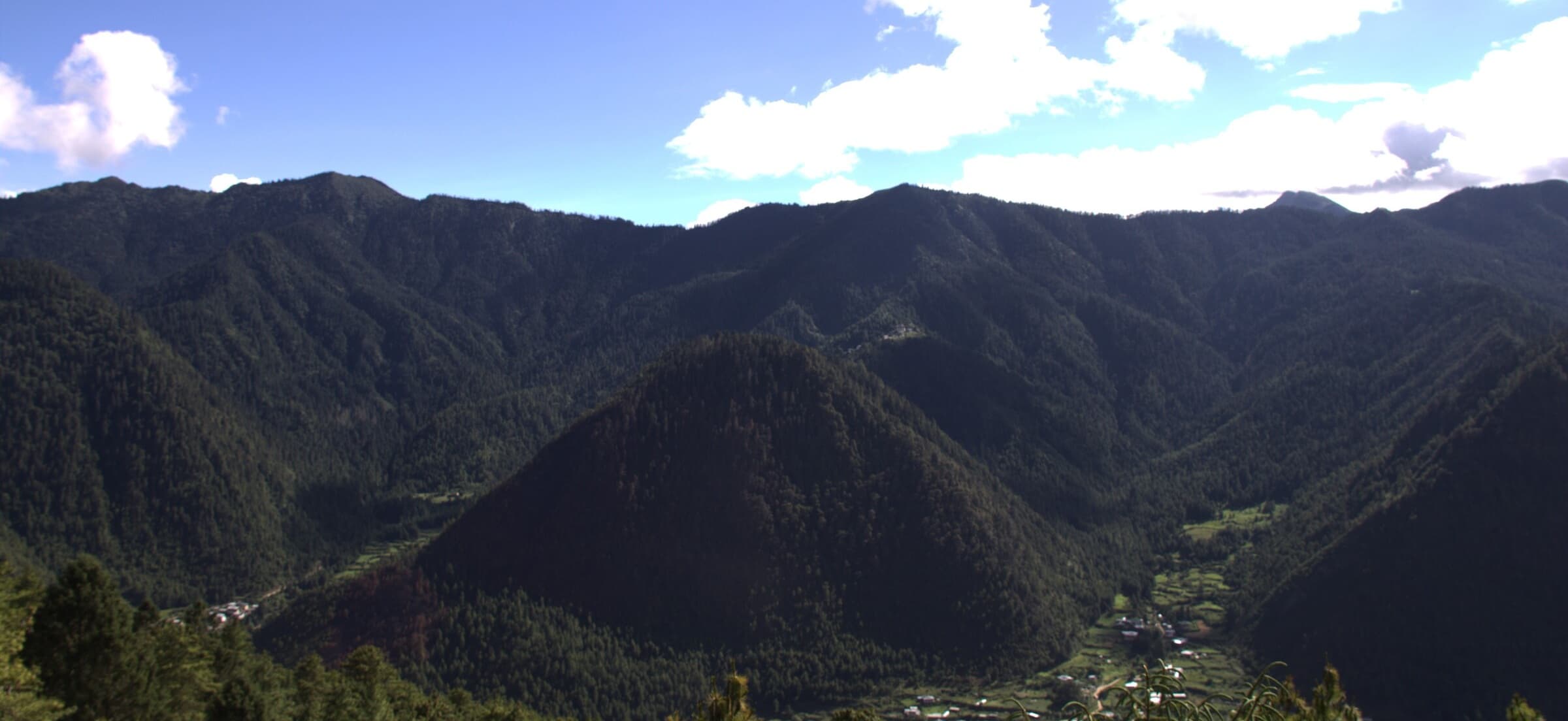
Haa Valley feels like a secret kept in plain sight. It lies close to Paro, yet the journey over Chele La makes it feel like another Bhutan entirely: higher, quieter, more rural, and less arranged around the expectations of visitors. The road rises through blue pine, dwarf bamboo and prayer-flagged ridges before opening to views of high mountains and, on clear days, distant Himalayan peaks. Then the descent begins into a valley of farmhouses, fields, forested slopes and a kind of stillness that feels deeply local. Haa does not announce itself with grandeur; it invites you to lower your voice and look more carefully.
The valley's beauty is in its restraint. Lhakhang Karpo and Lhakhang Nagpo, the White and Black Temples, carry some of Haa's oldest spiritual associations, their presence woven into the valley's identity rather than set apart from it. Around them, daily life continues with quiet confidence: farmers working the land, children walking home from school, smoke lifting from traditional houses, the hills watching over everything. The drive across Chele La is part of the experience, not merely the route in, with prayer flags strung across the pass and walking trails leading into forests and alpine clearings. For travellers who enjoy slower discovery, Haa offers gentle walks, village encounters, farmhouse meals and a sense of Bhutan before it has been polished for display.
Haa is most rewarding in spring, summer and autumn. Spring brings fresh growth to the fields and clear, bright days on the higher passes. Summer turns the valley lush and green, with a softness that suits its pastoral character, though rain and cloud are part of the season's rhythm. Autumn is crisp and beautiful, with clean light, harvested fields and excellent conditions for walking and photography. Winter can be cold, especially at altitude and around Chele La, but it also brings a rare quietness, when the valley feels even more inward and remote. Haa is not a place to rush through in poor weather; its pleasures are subtle and best enjoyed with time.
Accommodation in Haa is more intimate than indulgent. This is not the valley for grand hotel theatre, but for characterful lodges, heritage-style stays, simple local hotels and, where appropriate, farmhouse hospitality. The best places to stay here offer warmth, sincerity and a closer connection to the surrounding landscape. A room with wooden floors, the valley sitting quietly beyond the window, and the sound of nothing in particular — these are Haa's version of luxury.
In a wider Bhutan journey, Haa works beautifully as a thoughtful detour from Paro. It can be added at the beginning for travellers who want to ease into Bhutan somewhere quiet, or near the end as a final, more private counterpoint to the country's better-known valleys. It pairs especially well with Paro because the route over Chele La gives the journey a sense of passage: from the iconic and ceremonial into something more hidden and rural. For those who have already seen Bhutan's classic highlights, Haa offers a different reward — not another famous sight, but a deeper texture.
Haa is for travellers who understand that some places are memorable precisely because they do not try to be.