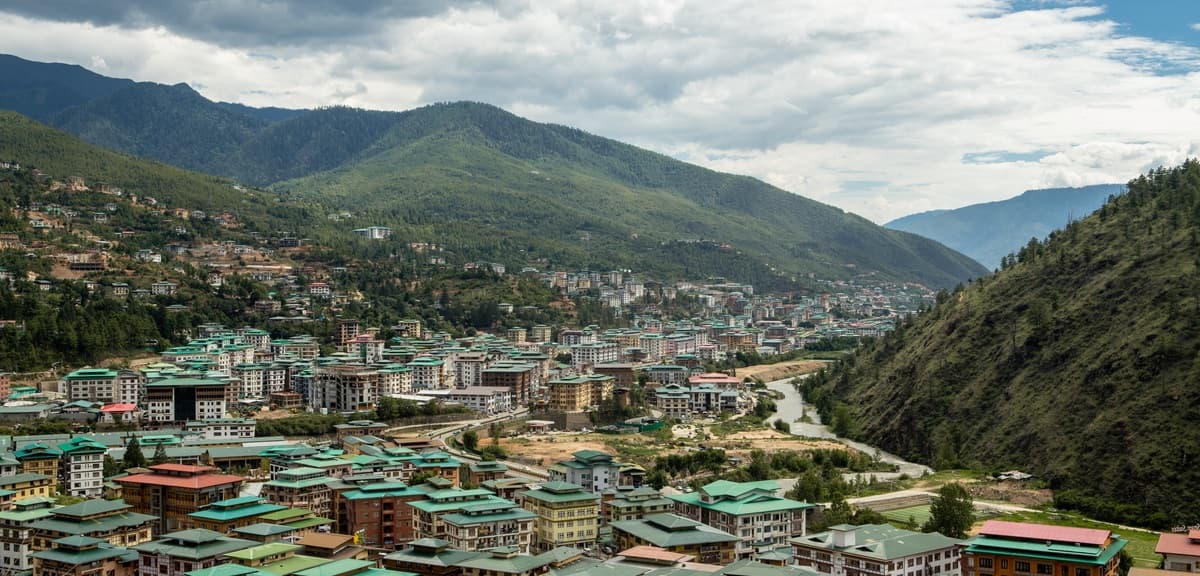
Thimphu is unlike any capital city most travellers have known. It sits in a high Himalayan valley, framed by forested hills, yet carries the quiet confidence of a place where tradition has not been pushed aside by modern life. There are government offices and cafés, weekend markets and schoolchildren in national dress, monks walking past shopfronts, and prayer flags climbing the ridgelines above the city. There are no traffic lights; instead, a white-gloved policeman still directs the main intersection with an almost choreographed grace. Arriving in Thimphu feels less like entering a capital and more like being invited into Bhutan's living conversation with itself — thoughtful, evolving, rooted.
To understand Thimphu, it is best not to rush between monuments, but to let the city reveal its layers. Tashichho Dzong, seat of government and monastic life, is most beautiful in the late afternoon when the white walls warm in the fading light and the valley begins to quieten. Above the city, the great Buddha Dordenma looks out across the hills, vast and serene, with views that place Thimphu in its natural bowl of mountains and sky. The National Memorial Chorten is more intimate: elderly Bhutanese circumambulate with prayer beads in hand, families pause between errands, and devotion folds naturally into daily routine. Elsewhere, the city offers quieter encounters — traditional paper-making workshops, textile studios, small museums, local markets, archery grounds, bookshops, cafés and craft stores that show a more contemporary Bhutan emerging without losing its sense of self.
Thimphu can be visited throughout the year, though each season changes the mood of the valley. Spring brings fresh growth and soft light to the hillsides, making it a lovely time for gentle walks and cultural exploration. Autumn is clear and bright, with blue skies, comfortable days and a crispness that suits the city's monastic courtyards and mountain views. Winter mornings can be cold, but the air is often sharp and clean, and the city feels calm, spacious and deeply atmospheric. Summer brings rain and a lushness to the surrounding slopes, with clouds moving low across the valley and a slower, greener rhythm to the days.
Accommodation in Thimphu ranges from elegant luxury hotels with polished service to smaller boutique properties and comfortable locally run stays. The best hotels give you access to the city without overwhelming the sense of place — a warm room after a day of exploring, views towards the hills, traditional design details, and food that can move between Bhutanese flavours and international comfort. For travellers who enjoy texture and character, Thimphu also offers stays that feel more personal and urban, close to craft shops, cafés and the gentle movement of city life.
In a wider Bhutan journey, Thimphu is often the natural first stop after Paro. It helps travellers understand the country beyond its postcard images: Bhutan as a modern kingdom, a spiritual society, a place of policy, education, art, ambition and everyday life. From here, the road leads east towards Punakha over the Dochula Pass, or deeper into central Bhutan for those with more time. Thimphu is not usually the single grand highlight of a journey; it is something subtler and perhaps more important — the place that gives context to everything that follows.
Most capitals demand to be seen. Thimphu asks to be understood — and rewards those who take the time.
More destinations