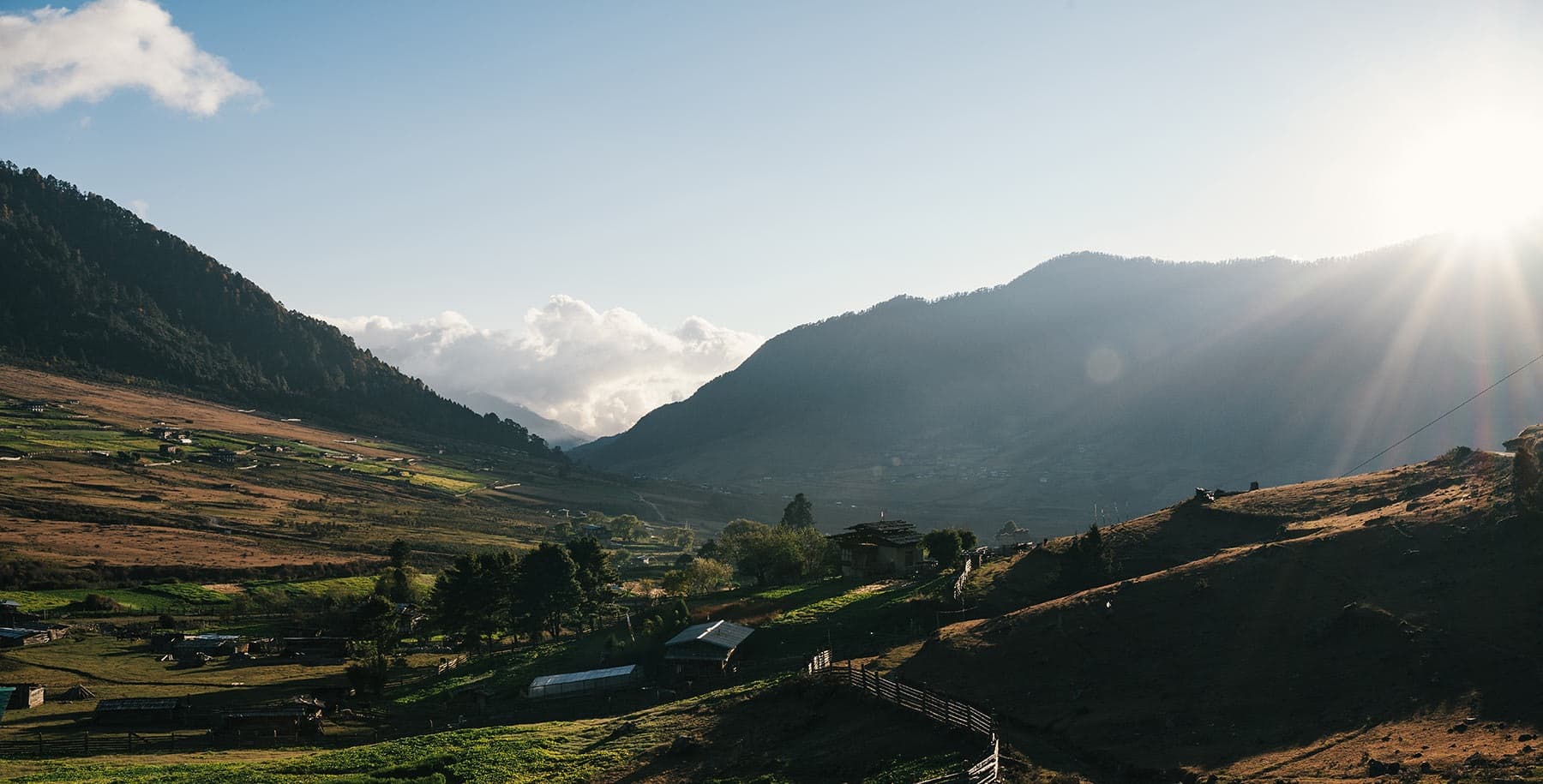
Phobjikha arrives as a change in altitude and temperament. The road climbs through forest and then releases you into a wide glacial valley, open and hushed, with a feeling closer to the Tibetan plateau than the warmer valleys of western Bhutan. Here the landscape is not dramatic in the usual sense; it is spacious, pale, wind-brushed and deeply quiet. Farmhouses sit low against the slopes, marshland stretches across the valley floor, and Gangtey Monastery watches from its ridge with a calm, almost protective presence. Phobjikha is a place where Bhutan feels elemental — sky, grassland, forest, prayer and silence.
The great experience here is not a single monument, but the valley itself. Gangtey Goenpa is the natural beginning, its courtyards opening towards one of Bhutan's most beautiful landscapes. From there, the Gangtey Nature Trail leads gently through pine forest, open meadows and village paths, giving you time to feel the scale of the valley on foot. In winter, Phobjikha becomes the seasonal home of the black-necked cranes, whose arrival is greeted with unusual reverence. To see them feeding in the wetlands or lifting into the cold morning air is to understand why the valley is treated with such care. Even outside crane season, Phobjikha has a rare stillness: prayer flags moving on ridgelines, cattle grazing in the distance, smoke rising from farmhouse chimneys, and light moving slowly across the marsh.
The best time to visit depends on what you want the valley to give you. From late autumn into winter, Phobjikha is at its most distinctive, with the arrival of the black-necked cranes and a clear, austere beauty that suits the open landscape. November is especially meaningful, when the valley's crane festival brings together conservation, devotion and community life. Spring softens the valley again, with fresh growth, clear walking conditions and a gentler mood. Summer is lush and green, though rain and mist are part of the season's character. Phobjikha is cooler than Punakha and often colder than Paro or Thimphu, so it rewards travellers who come prepared for crisp mornings, quiet evenings and the pleasure of warmth after a day outdoors.
Accommodation in Phobjikha is wonderfully atmospheric. There are refined lodges that make the most of the valley's vastness, with fireplaces, long views and interiors that feel deeply connected to the landscape. There are also smaller, characterful stays and simple local hotels that bring you closer to village life. The best places here understand that luxury in Phobjikha is not about excess; it is about space, warmth, stillness and the feeling of being held by the valley.
In a wider Bhutan journey, Phobjikha is often the contemplative pause between Punakha and central Bhutan, or a deeply worthwhile detour for travellers following the classic western route. It changes the rhythm of an itinerary. After the great dzongs, temples and valley towns, Phobjikha offers openness — a place to walk, breathe, listen and notice. It also pairs beautifully with Punakha, creating a journey that moves from warm river valley to highland wetland in just a day's drive.
Phobjikha stays with travellers not because it asks for attention, but because it gives them room to be still.
More destinations