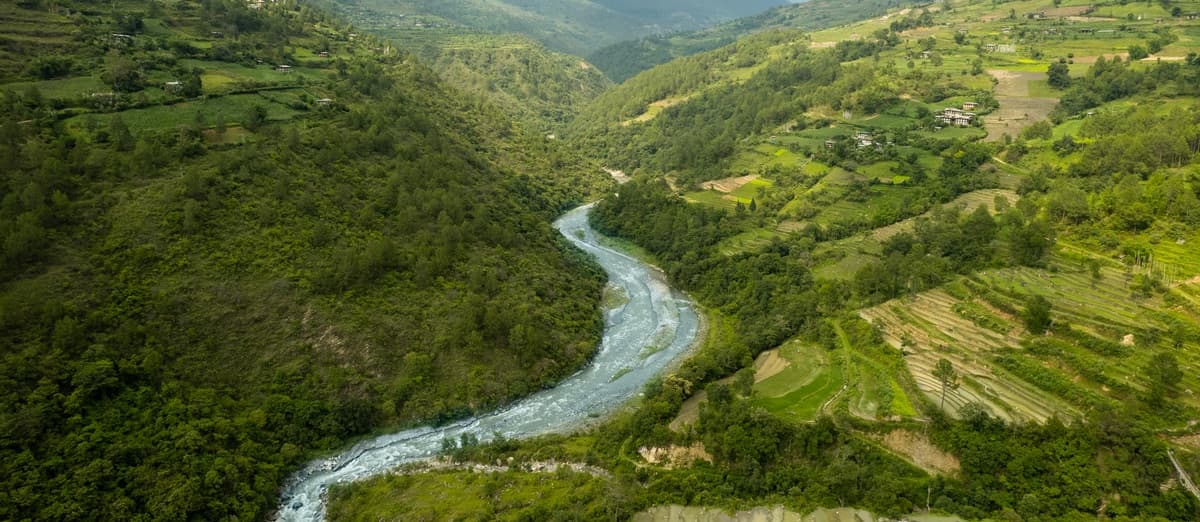
Trashigang feels like Bhutan after the road has travelled far enough to change its own language. Set deep in the east, beyond the familiar western circuit, it has the atmosphere of a frontier town shaped by ridges, river valleys and old routes of exchange. The approach is long and winding, but that is part of its meaning. By the time you arrive, Bhutan has become less curated, more lived-in, and more openly eastern in its textures: steeper slopes, warmer air, different dialects, busy little markets, and a sense that the country is still unfolding beyond what most visitors ever see.
The dzong is the natural anchor of Trashigang, poised above the valley with the confidence of a fortress that has watched generations pass beneath it. Around it, the town gathers in a compact, practical way: shops, prayer wheels, schoolchildren, monks, traders, and travellers breaking a long journey across the east. The wider district is where Trashigang becomes especially rewarding. Radhi is known for its rice fields and weaving traditions, while Rangjung brings monastic life into a quieter rural setting. Gom Kora, reached as a meaningful excursion, has the feeling of a sacred site held close by the landscape, with river, rock and ritual woven together. Further still, the highland worlds of Merak and Sakteng open a very different cultural horizon, home to Brokpa communities and pastoral traditions that feel distinct even within Bhutan.
Trashigang is best visited when the roads, light and weather allow the east to be enjoyed at a humane pace. Spring brings warmth, fresh growth and good conditions for travelling through the valleys, while autumn is especially beautiful, with clearer skies and a settled quality after the rains. Winter can be pleasant at lower elevations, though mornings and evenings are cool and higher areas require proper layers. Summer makes the hills intensely green, but rain can slow journeys and soften the roads, so it is better suited to travellers who are comfortable with a little unpredictability. More than some destinations, Trashigang rewards patience with the season and respect for distance.
Accommodation in Trashigang is simpler than in Bhutan's better-known western valleys. This is not the place for polished resort luxury, but for comfortable local hotels, modest lodges and stays that give access to the life of the east. The pleasure here is not in elaborate service, but in waking above a valley town, hearing the day begin, and understanding that you are somewhere many travellers never reach. For the right visitor, that sense of remoteness is the luxury.
In a wider Bhutan journey, Trashigang is usually a destination for those who have time to go beyond the classic route. It can form part of a rich eastward journey through Bumthang, Mongar and Trashigang, or connect onward towards Samdrup Jongkhar and Assam. It is not a casual detour from Paro or Thimphu; it asks for commitment. But that commitment changes the journey, turning Bhutan from a sequence of highlights into a fuller crossing of landscapes, languages and ways of life.
Trashigang is where Bhutan stops performing its first impressions and begins to speak in a different, deeper register.