Photo: Setu Chhaya / Pexels
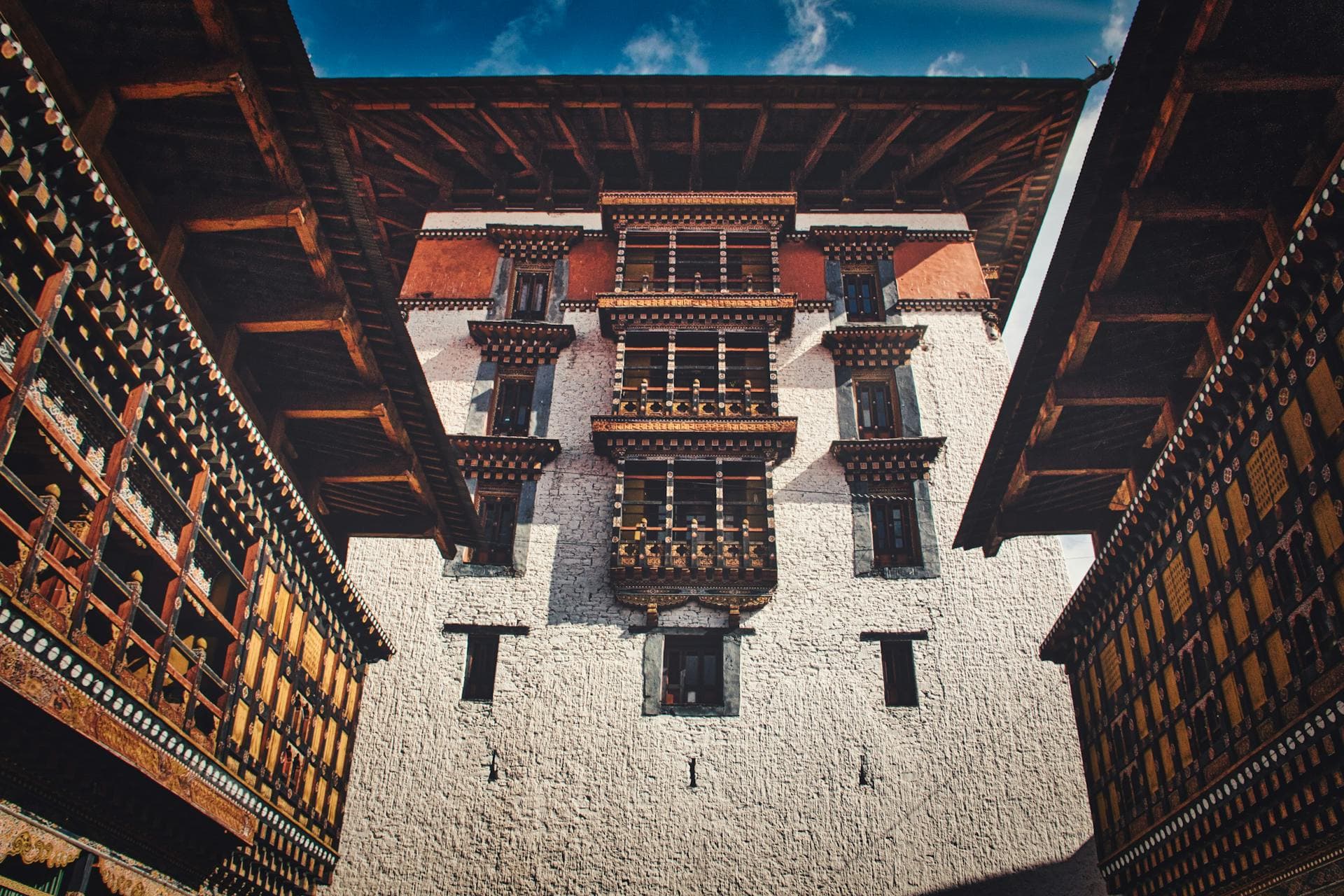
No building defines Bhutan more completely than the dzong. Part fortress, part monastery, part administrative centre, the dzong is the clearest architectural expression of a society in which the sacred and the civic have never been separated. Set on ridges, above rivers, or at the mouths of valleys, these immense whitewashed structures do not simply occupy the landscape — they command it. Encountering one for the first time, whether in Paro, Punakha or Trongsa, feels less like arriving at a monument and more like stepping into a living kingdom of walls, courtyards, ritual and memory.
What makes Bhutanese architecture so compelling is its remarkable consistency. Dzongs are defined by their inward-sloping walls, fortified entrances, central towers, open courtyards and richly decorated timber details, while traditional houses carry the same visual language in rammed earth, stone, timber, painted window frames and sloping roofs. Official Bhutanese sources note that many dzongs were traditionally built without nails or iron bars, and in many cases without written plans, while modern buildings across the country are still required to follow traditional design rules. The effect is extraordinary: even contemporary Bhutan feels architecturally rooted in its past.
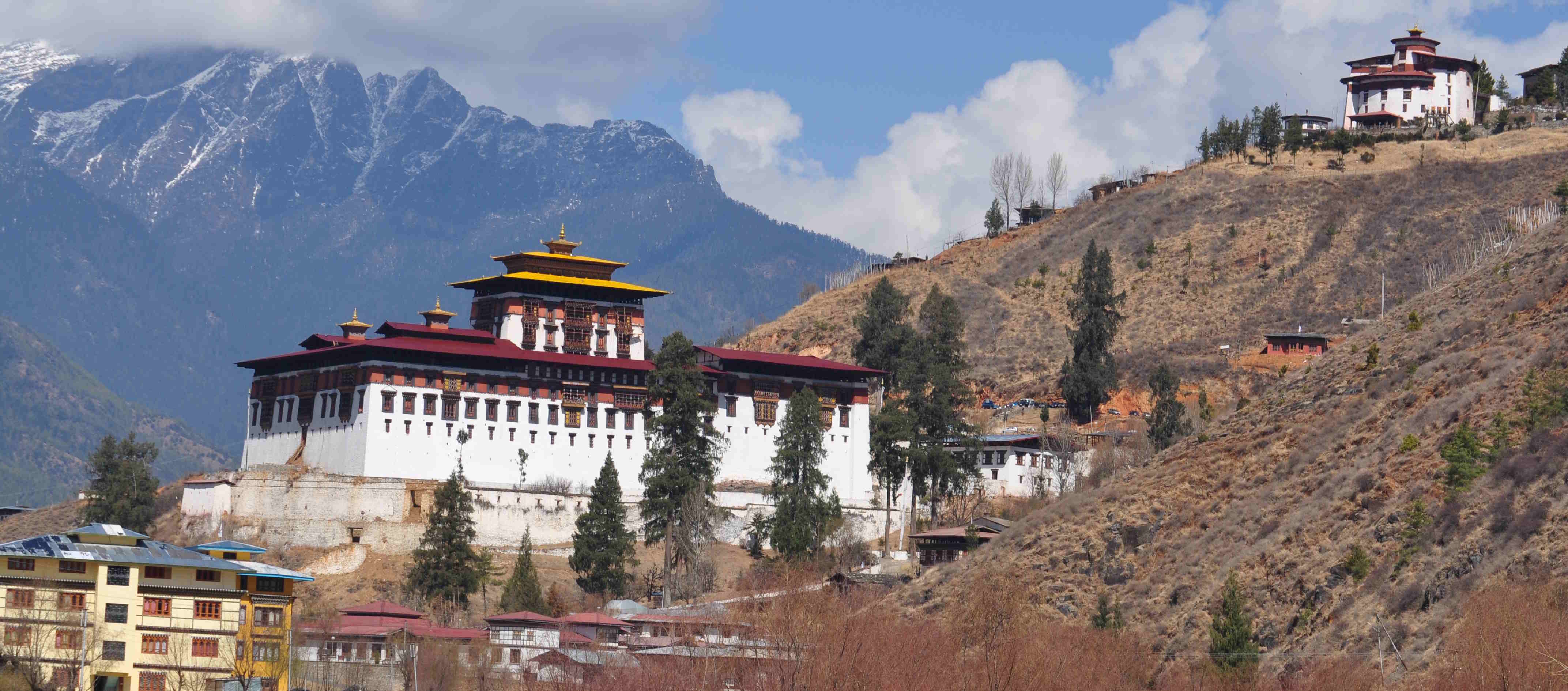
Some structures stay with you long after you leave. Punakha Dzong, built in 1637, rises at the confluence of two rivers and is still regarded as one of Bhutan's most beautiful, as well as the site where Bhutan's kings have been crowned. Rinpung Dzong dominates the Paro Valley with immense buttressed walls and remains one of the country's defining sights. Trongsa Dzong, built in 1647, was the great strategic stronghold of central Bhutan, controlling the route between east and west. And above Paro, Ta Dzong — originally a 17th-century watchtower — now houses the National Museum, adding yet another layer to Bhutan's extraordinary built heritage.
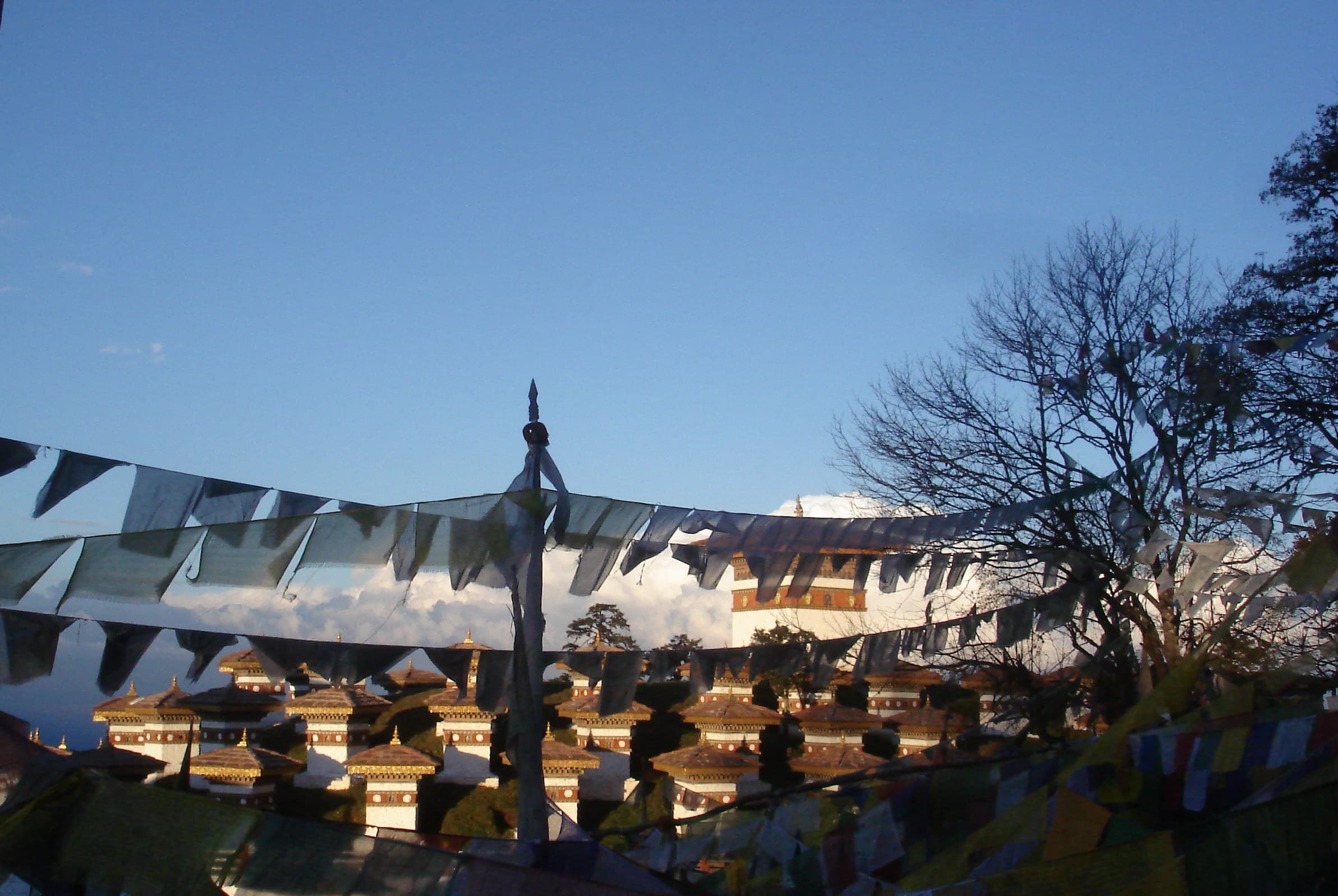
Beyond the great fortress-monasteries, Bhutan's built environment remains one of the most distinctive in the world: farmhouses painted with protective symbols, temples and chortens in traditional form, cantilever bridges strung with prayer flags, and even modern civic buildings that still honour inherited design. It gives the country a rare visual coherence — a feeling that architecture here is not just about shelter or status, but about continuity, identity and belief. For travellers, that makes Bhutan not only beautiful to look at, but deeply memorable to move through.