When Jigme Singye Wangchuck, the Fourth King of Bhutan, said in the early 1970s that "Gross National Happiness is more important than Gross National Product," it was more than a memorable turn of phrase. It was a quiet act of defiance. Much of the twentieth century had taught nations to measure themselves by output, expansion, extraction and speed. Roads, factories, exports, consumption: these were the grammar of progress. Bhutan, small, mountainous and newly opening itself to the modern world, chose to ask a different question. What if development was not simply a race to produce more, but a careful act of deciding what should not be lost?
Gross National Happiness, often shortened to GNH, is sometimes misunderstood as a national mood, as if Bhutan were claiming to be a country where everyone is cheerfully content. It is subtler than that, and more serious. At its heart are four guiding ideas: sustainable development, cultural preservation, environmental conservation and good governance. In daily life, these do not appear as abstract principles. They influence how roads are built, how forests are protected, how festivals are maintained, how schools and healthcare are valued, and how tourism is managed. The philosophy is not anti-modern. Bhutan has mobile phones, cafés, start-ups, traffic, exams and ambition. But GNH asks modernity to enter through a narrower door, to justify itself not only by what it adds, but by what it disturbs.
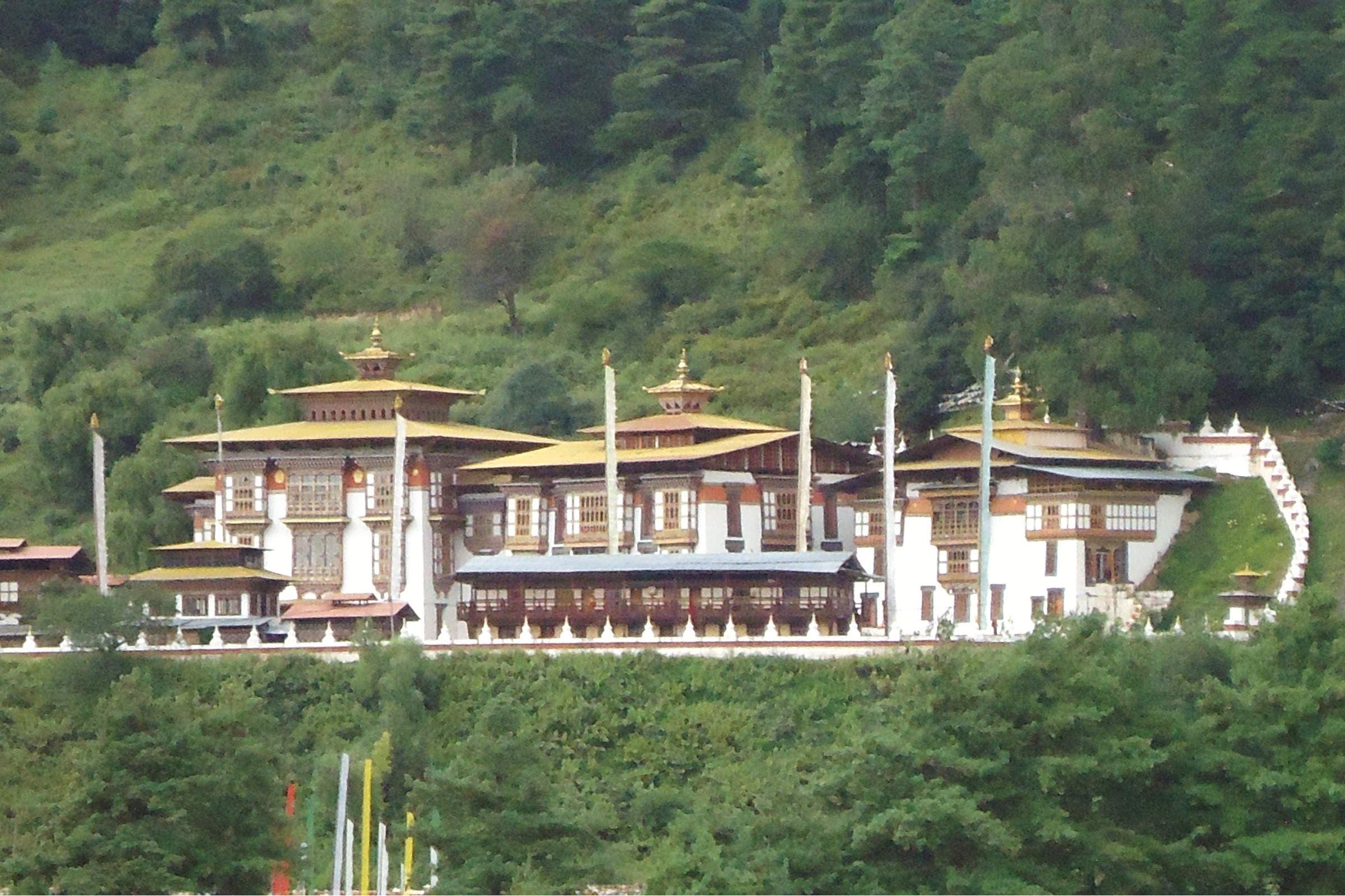
For the traveller, this begins to make sense slowly. At first it may be felt simply as absence. Roadsides are not crowded with giant advertising billboards. Sacred buildings are not treated as backdrops for casual spectacle. At dzongs, those immense fortress-monasteries that seem to rise from the land itself, dress codes remind visitors that beauty here is not separated from reverence. The Sustainable Development Fee, often debated before arrival, is part of Bhutan's long attempt to keep tourism valuable without allowing volume to overwhelm the country. Even rules that can feel restrictive — around tobacco, or where and how one travels in fragile high-altitude landscapes — belong to a wider instinct: that individual freedom is not the only measure of a good society; stewardship also matters.
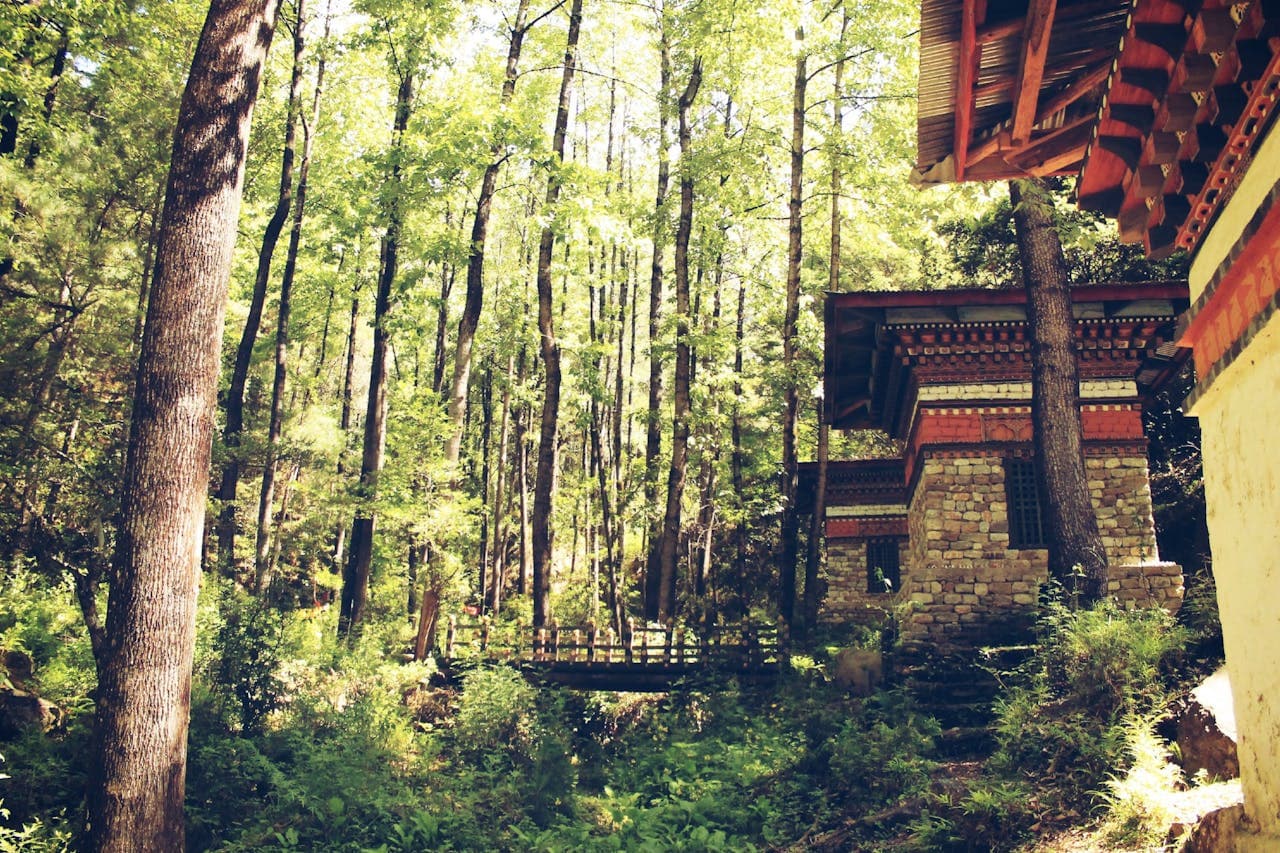
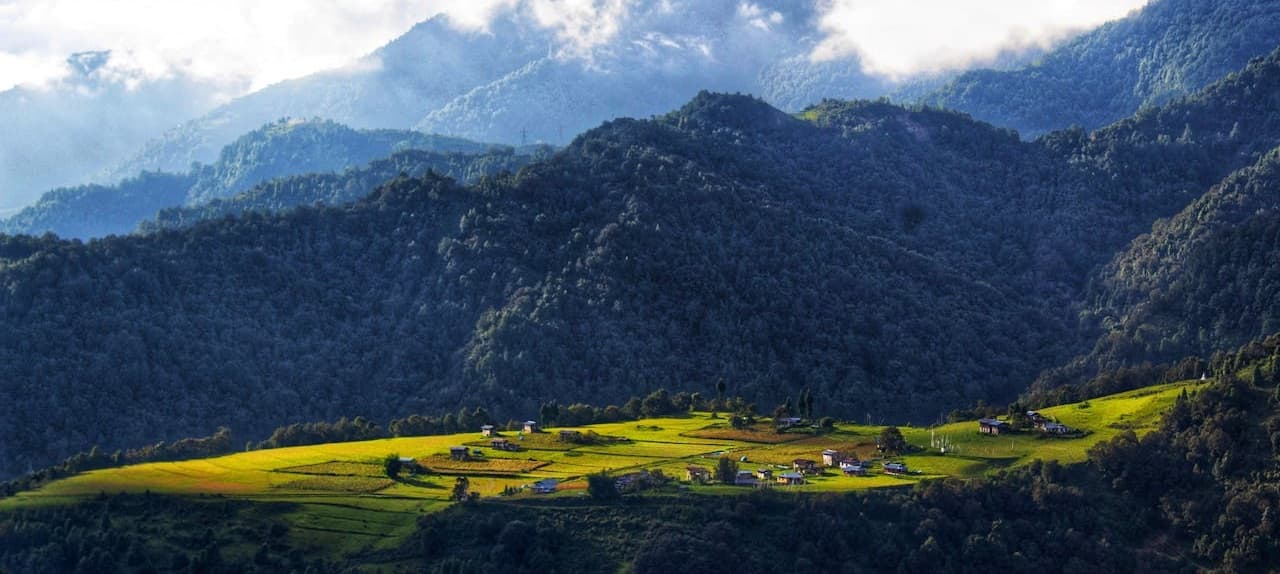
Photo: Anugrah Lohlya / Pexels
This is why Bhutan can feel, to an attentive visitor, unusually intentional. A journey through Paro, Thimphu, Punakha or Bumthang is not an escape from the modern world so much as an encounter with a country negotiating with it. Prayer flags fade in the wind beside new roads. Young monks carry smartphones. Teenagers in traditional dress scroll through global feeds. Archery grounds sit within earshot of construction sites. The point is not that Bhutan has avoided change. It has not, and no country could. The point is that change is still argued with, shaped, slowed down, sometimes resisted, sometimes welcomed. GNH gives the argument a language.
It is important, too, not to romanticise the idea beyond recognition. Bhutan faces real pressures. Young people are connected to the same global aspirations as their peers elsewhere. Many look abroad for study, work and opportunity. Unemployment, economic vulnerability and the pull of migration are part of the national conversation. The philosophy of happiness does not dissolve these tensions. It does not guarantee contentment, nor does it make policy simple. In some moments, GNH can feel less like an answer than a question Bhutan keeps asking itself: how do we grow without becoming careless? How do we preserve culture without freezing people inside it? How do we welcome the world without being consumed by it?
For travellers, that honesty matters. The power of Bhutan is not that it offers a perfect alternative to the rest of the world, but that it has made visible a dilemma many places have surrendered to invisibly. In countries transformed by mass tourism, the visitor often arrives after the soul of a place has already been packaged, priced and thinned out. In Bhutan, there remains a sense that the country has drawn lines around certain things: forests, ritual, language, dress, architecture, silence, pace. Not every line is comfortable. Not every policy is beyond criticism. But the cumulative effect is unmistakable. The visitor feels not only that the landscape has been protected, but that the rhythm of the place has been protected too.
Perhaps this is the most lasting gift of travelling in Bhutan. Gross National Happiness is not something one sees in a single monument or hears explained once by a guide and then understands. It gathers in small impressions: a valley without visual noise, a temple approached with care, a government office flying prayer flags, a mountain pass where the wind seems to have more authority than the road. It leaves behind a thought that is both simple and difficult. A nation, like a person, becomes what it chooses to measure. And Bhutan, imperfectly but insistently, has chosen to measure more than wealth.